
Blog
Trends, fashion, style – what to follow when arranging interiors.
Are you planning a renovation or furnishing your first apartment, browsing inspiration online and in interior design magazines. How to find the right one for you amidst the thicket of trends, styles and colors? Here's what architect Krzysztof Miruć advises. Is there any difference between a trend and a fashion in interiors? Trends and fashions appear more often in the world of fashion than in design and [...]

Are you planning a renovation or furnishing your first apartment, browsing inspiration online and in interior design magazines? How do you find the one for you amid the thicket of trends, styles and colors? Here is what architect Krzysztof Miruć advises.
Is there any difference between a trend and a fashion in interiors?
Trends and fashions appear more often in the world of fashion than in design and interior design. In interiors, they are more spread out over time and are not seasonal. Admittedly, Pantone presents its “color of the year” every year and that is a kind of guideline for all other companies creating furniture or accessories as to what tone they should design in, but implementing that trend takes from several to a dozen or so months. This means that from its announcement to its appearance in our homes, about a year passes.
What would you advise to people furnishing an apartment who would like to arrange an interior “on trend”?
In my opinion, more important than the question “what do I like now” is the question “what will I also like in the future.” Arranging interiors in line with trends carries the risk that the interior will quickly become dated. Before we decide on the dominant trend in the interior, we should answer the question of whether we will feel good with these currently fashionable elements for a longer period of time, also when they stop being fashionable.
And what should a person just starting their adventure with interior arranging pay attention to when arranging their dream place to live?
We have a great deal of inspiration around us, we travel, we use Pinterest, Instagram, we watch TV programs. And the more we look at, the more things we like. Before we choose something for ourselves, let us think about what kind of space we feel good in.
A good idea would be to choose photos with particular styles and mark on them what we like, and also pay attention to whether we are not accidentally throwing things from many different styles into the design. Restraint and moderation in furnishing are very important.
Let us avoid, however, solutions that we like here and now. Let us remember that a house or apartment is a space in which we will live. Often for years. In a restaurant or hotel whose interiors we like and which are nice, we stay temporarily. It may turn out that such solutions in our homes will be non-functional or will begin to tire us.
If we do not ask ourselves the key questions “will I also like this trend in the future” and “in what kind of interiors would I like to live,” then there will be a risk that either we will create an interior that is bland and becomes a fashion patchwork, or in time we will stop liking it.
You design interiors for your clients and participants in your programs. Could you determine which styles are of greatest interest?
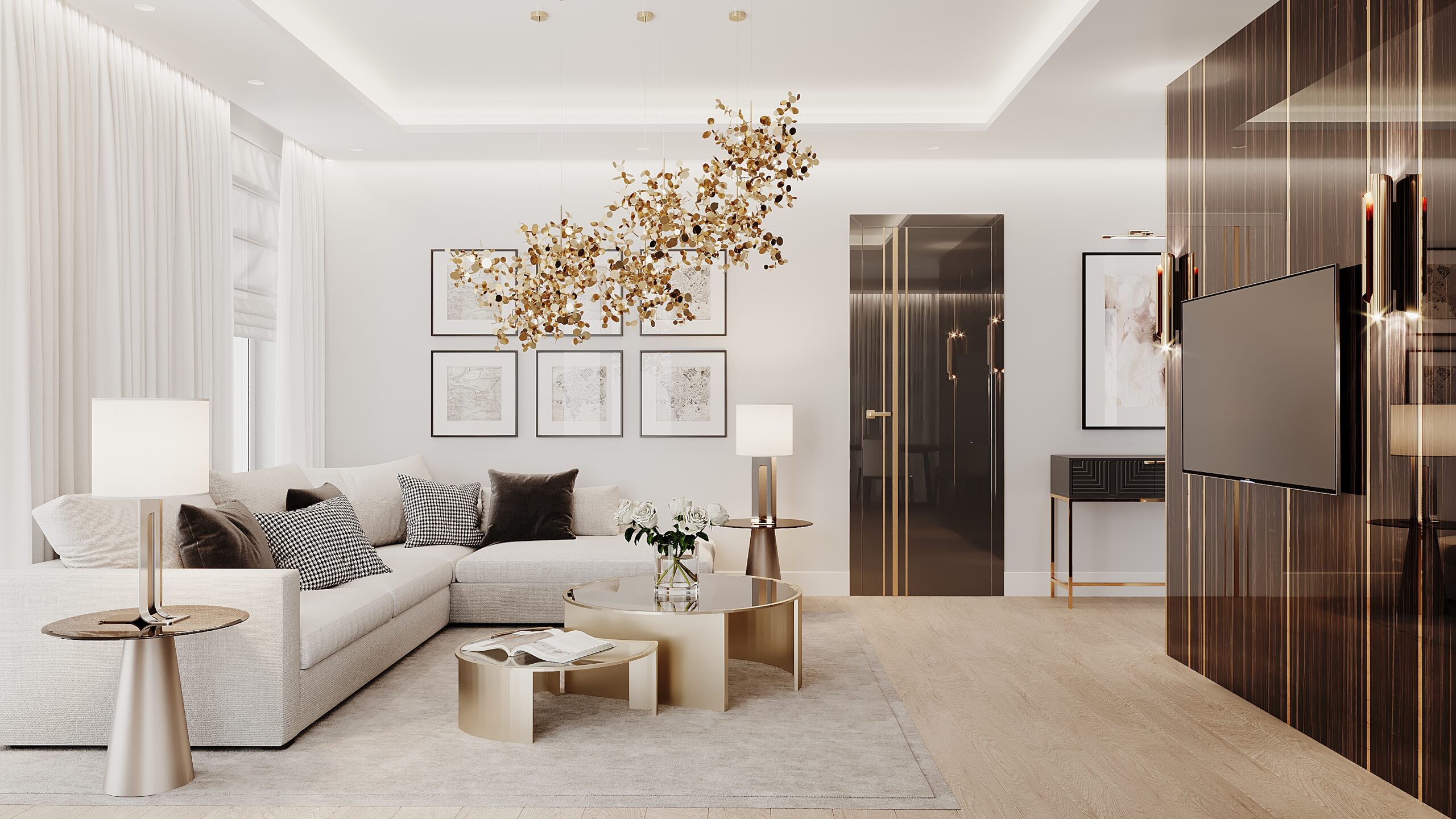
We certainly like classic interiors and the currently very fashionable loft interiors. Why? Because they are casual interiors where old things, things with character, can appear. We also like boho, because it is very close to nature, uses natural fabrics, wood, aged materials. We also like the glamour style, which simply means there must be sparkle, as well as the modern, Scandinavian style, that is, a combination of gray, white and simplicity. We have a wide range of tastes and that is good, because it means that diversity prevails in interiors.
How, while following what we like, can we not lose what is most important: ergonomics, comfort and functionality?
Ergonomics is very important, so it is worth reading more about it. A non-functional interior can deprive us of the pleasure of using it and, consequently, will begin to tire us.
Let us not reinvent the wheel and let us use the knowledge and experience of others. The basic principles of organizing space were established long ago, such as the famous kitchen triangle or the minimum distances necessary for moving freely between fixtures in a bathroom. It is enough to follow them, and the interior will be friendly and functional.
Today we are talking about inspirations and trends. What inspired you while designing the latest line of DRE Supreme?
The main inspiration that was meant to connect all the collections was the city. When designing the individual collections, I broke down the idea of the city into several factors – from their topography, through architecture, to the name. That is why SOHO is decorated with geometric details referring to the industrial part of New York, CITY is full of sparkle like the skyscrapers in London's business district, HAMPTON was inspired by the buildings of a seaside resort, and the milling on the door leaves from the SOL collection refers to a city map.
The DRE Supreme line inspired by the city
What should guide you when choosing a door style?
Of course, for every interior we select door leaves, accessories, and furniture in line with the interior style. These can be more decorative items or ones that become a background for other elements. Most importantly, however, the doors should harmonize both with the space and with each other. If we have a large space, we will probably also have a lot of doors. In a store we look at one leaf, but we must be aware that, for example, in our hallway there will be 3 or 4 of them and they must form a whole.
If you had to choose one trend or one elementary mistake that you would like to protect everyone furnishing an interior from, what would it be?
I am opposed to a single, central lamp in a room. Contrary to appearances, inside we do not need overhead lighting. We need to brighten the room and give it atmosphere. Meanwhile, when buying an apartment in developer condition, we have one cable in the middle. Of course, we can decide on a pendant lamp, but then it should hang above the table. Let's change our thinking and spend more time planning the lighting, just as we plan the arrangement of furniture in the interior. It may turn out that we do not need that pendant lamp. Perhaps wall sconces, floor lamps, or ambient lighting will successfully replace it, brightening the interior and giving it atmosphere.
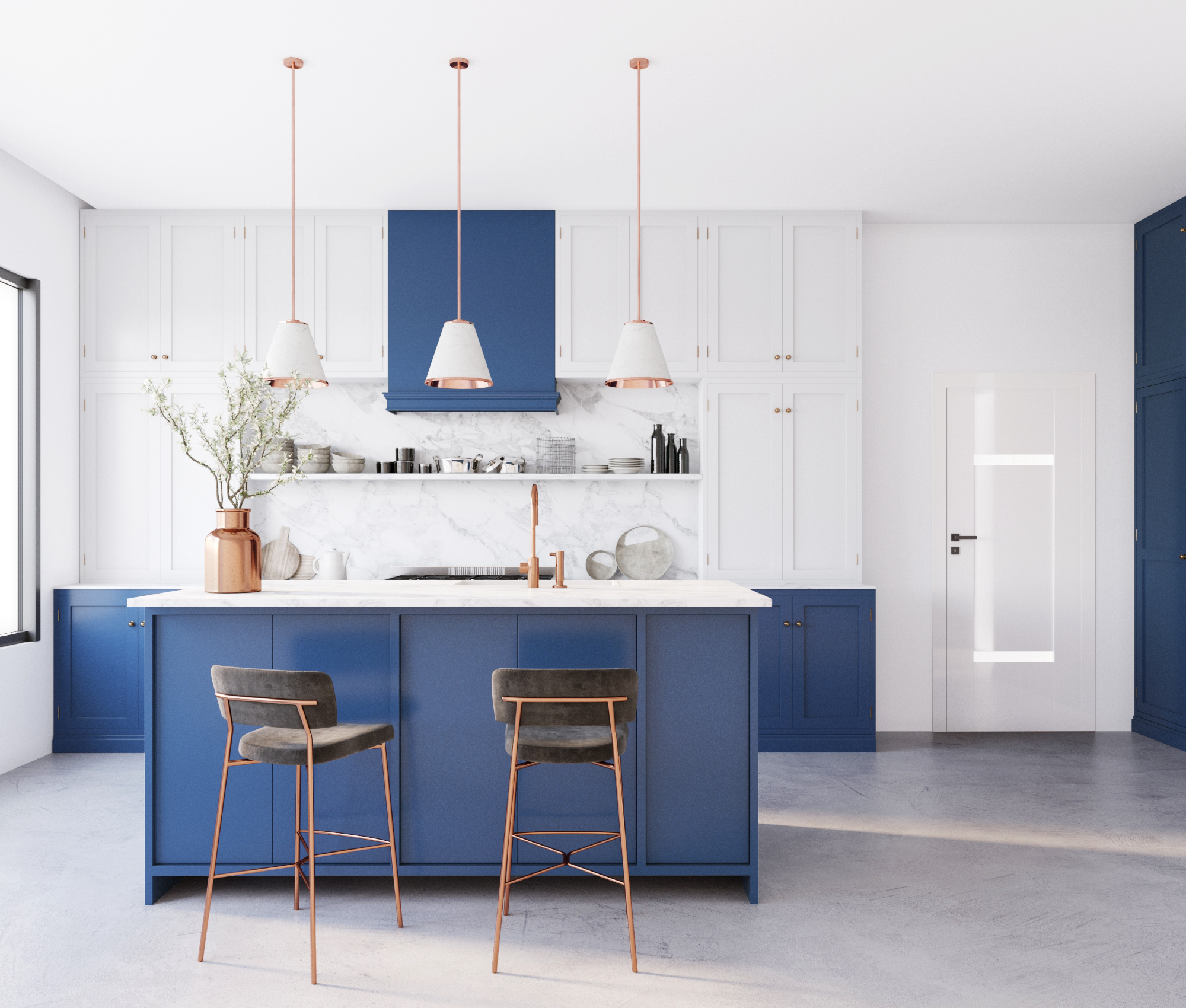
Overhead lighting located above the kitchen island
The second issue is the tendency toward interior-design excess. I always say that less is more. If we are not sure what we like, we do not have to buy all the furnishings at once. Let's wait, see how the individual elements compose with each other, and then the pleasure of designing such a space will be much greater.
There is increasingly loud and frequent talk about sustainable design, conscious purchasing decisions, and avoiding seasonal purchases. Is this a direction that will continue to develop?
Interior stores divide into those that offer very well-made and expensive items and those of lower quality but cheaper. There are no good and cheap products. Budget elements are usually less durable and after some time will have to be replaced. That is also why they are produced in short series. We also have the so-called secondary market, which is developing very well and which I would encourage everyone to use. It is a chance to buy excellent quality, unique design at a better, more accessible price. When looking for an oak table, you can use many websites where people sell such products. Such furniture can be renovated yourself or taken to a carpenter.
I am a supporter of personalizing the interior, not creating rooms from catalogues. Catalogues are created only to make the customer aware of how such a space can look. It is for everyone, which de facto means for no one. Composing an interior is the creation of the space in which we live, and therefore the creation of our own well-being. A simple example: buying a piece of furniture for sleeping. We need to sleep well, so we should have a good, comfortable bed. Unless we sleep well on the sofa. 😉 What matters is that we make the decision and build our own bedroom according to our preferences.
Please advise whether it is possible to change the style of an interior or give it character without a general renovation?
Both yes and no. Most likely, it will still involve renovation, e.g. repainting the walls or changing the arrangement of lighting fixtures. Of course, you do not have to demolish all the walls; sometimes it is enough to get rid of some things that are unnecessary to us. You have to ask yourself: what do I not need, and what must stay? If we manage that, then we match the rest to the element that remains, or we try to change it with accessories and decorative elements.