
Blog
Colors, Textures, and Materials – How to Combine Them in an Interior to Maintain Cohesion?
Mixing patterns and textures in interior design is an art that can give your home personality and character. A combination of diverse materials can create a space that not only delights the eye but also provides comfort and harmony. On the other hand, poorly composed colors, patterns, and textures can introduce chaos and randomness. Therefore, in this article, we present practical tips, […]

Mixing patterns and textures in interior design is an art that can give your home personality and character. A combination of diverse materials can create a space that not only delights the eye but also provides comfort and harmony. On the other hand, poorly composed colors, patterns, and textures can introduce chaos and randomness. Therefore, in this article, we present practical tips that will help you effectively combine different patterns, textures, and colors in your interior, while avoiding mistakes.
Rules of composition
To achieve a harmonious effect when mixing patterns and textures, certain rules of composition should be followed. Thanks to them, you can create a cohesive and attractive arrangement that won't be overwhelming to the eye. Combine patterns based on:
- Scaling, i.e., varying the size of the same patterns
- Contrast, i.e., juxtaposing elements that differ from each other
- Repetition, i.e., repeating motifs in different parts of the room
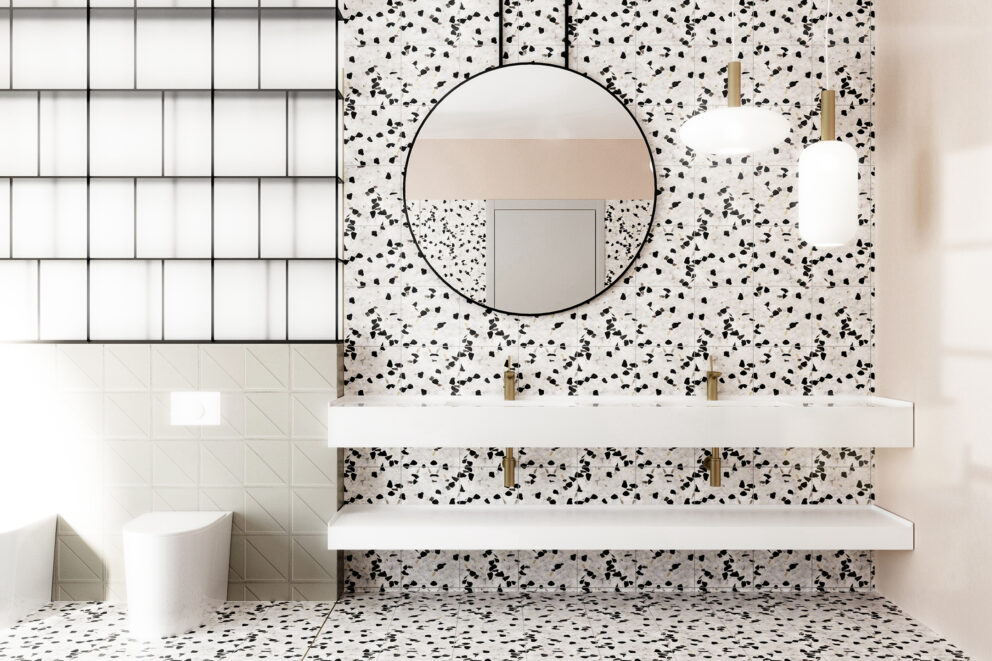
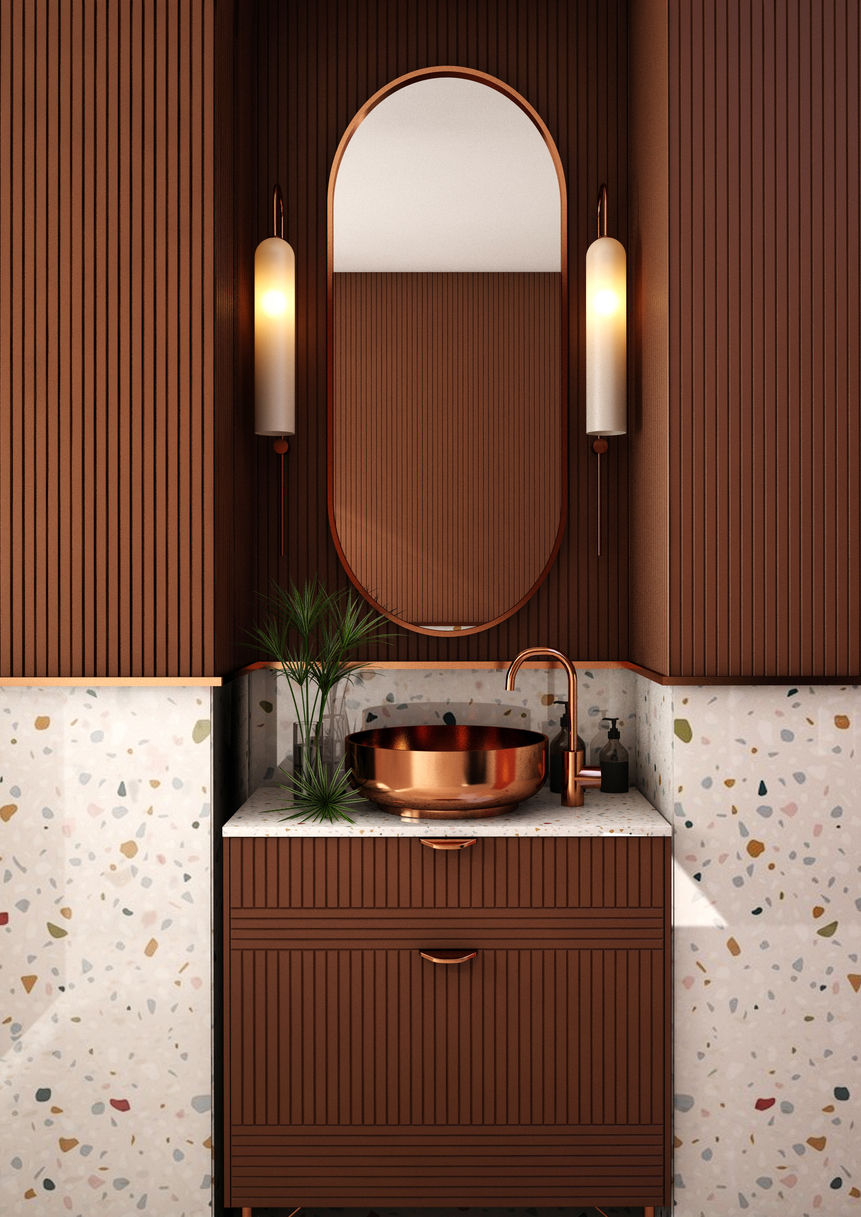
In this bathroom, various patterns and textures were combined: dark grout, glossy tiles, and an intense terrazzo pattern create a cohesive effect. This is thanks to color consistency – a composition of two base colors, white and black, and a complementary beige color.
Create a minimalist base for interior experiments
Basic design elements, such as furniture, woodwork, and walls, form the base for mixing patterns and textures. These are the most expensive and difficult-to-replace elements. When choosing them, exercise restraint and think ahead. When bold colors or patterns become boring, it's easier to replace curtains or pillows than kitchen cabinetry. When choosing permanent elements, it's worth opting for neutral colors that will provide a good foundation and background for more extravagant accents.
Doors to interiors full of patterns and designs
Want to go wild with door patterns or colors? When choosing a door leaf, we should follow the same principles that guide us when creating compositions with accessories. Want to choose a bold color, texture, or door leaf with decorative elements? Make sure they also appear on other elements of the furnishings. Here are reliable compositions:
The same color and texture: doors from the Auri collection in dark olive perfectly match green elements of kitchen cabinetry.

A detail that harmonizes with decorative elements: golden inlays on the Nova 70 door leaf correspond with the lighting and cabinetry elements.
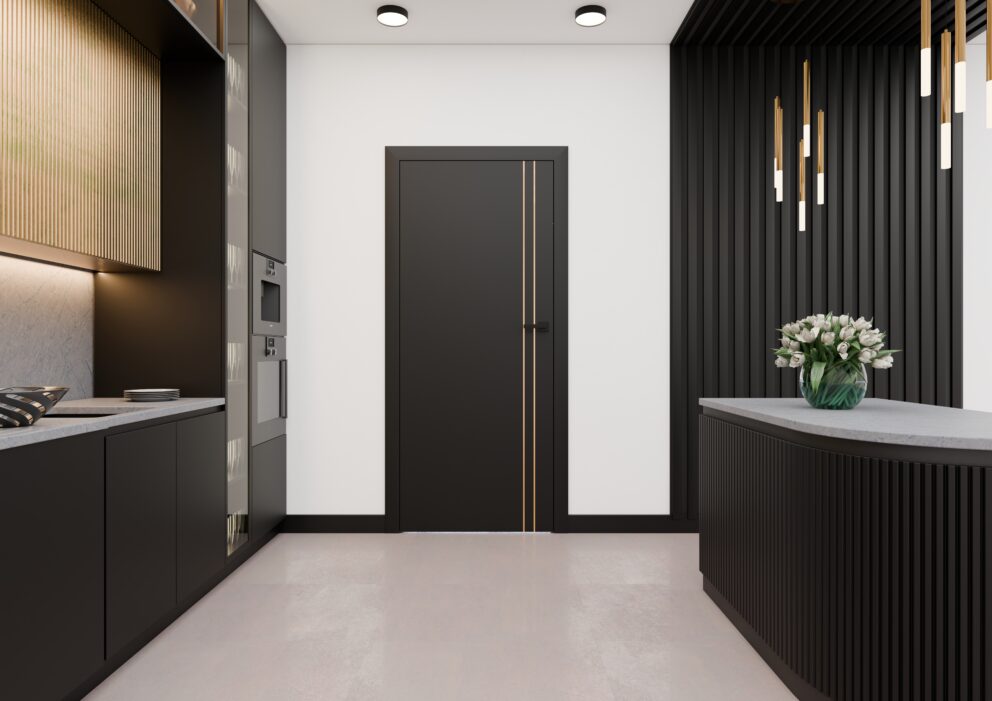
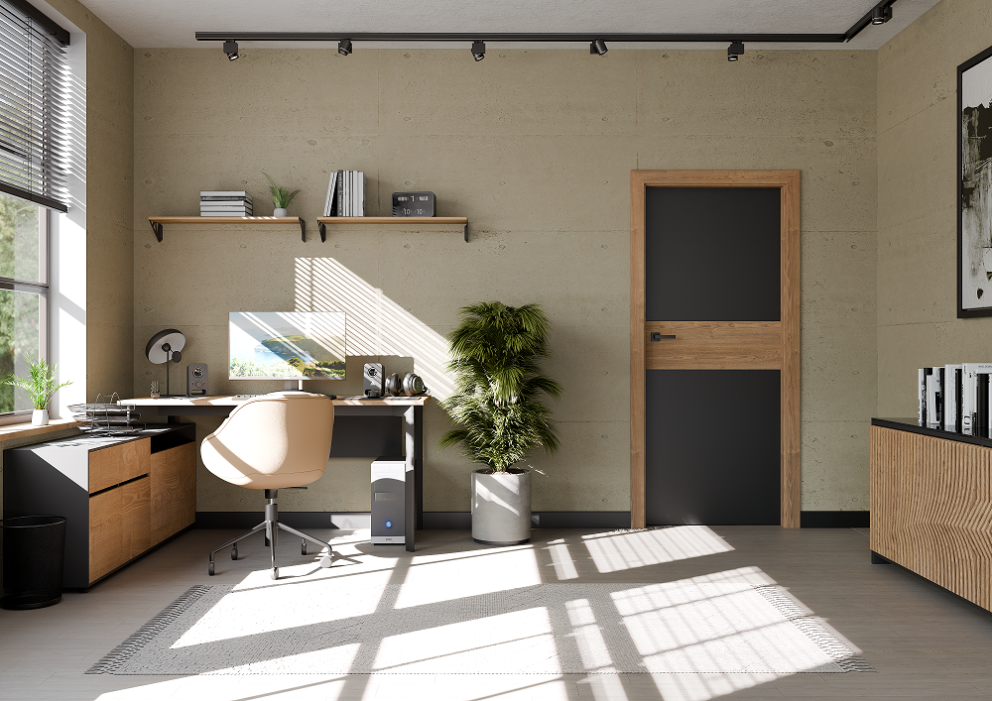
Are you planning to choose two-tone doors? Great! The combination of a smooth surface with a wood-imitating veneer creates an aesthetic composition that will work well in a modern interior. Remember, however, that the combination of these colors and textures should be reflected in the interior.
Different textures and colors: The color composition on the Rivia doors refers to the combination of wood and black on the furniture.
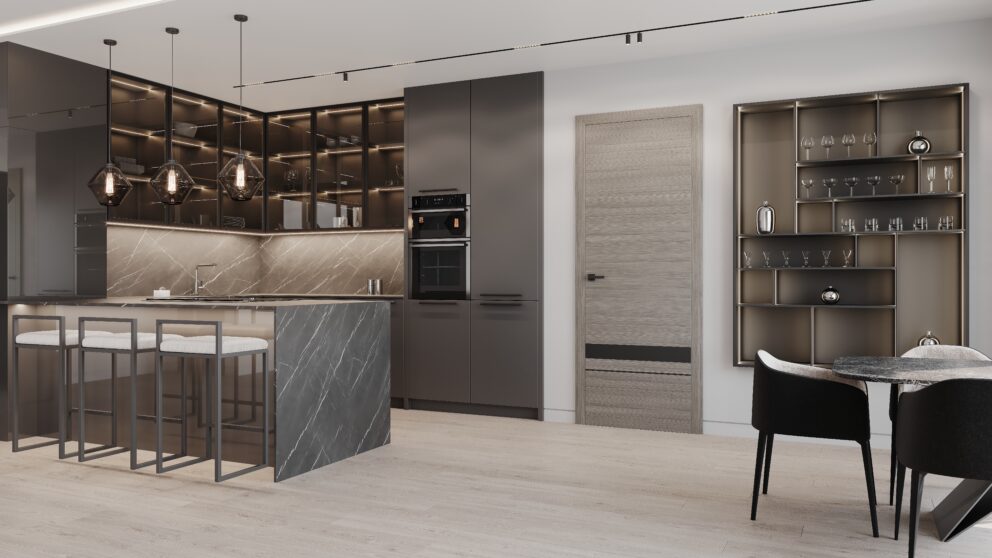
Does the texture and color of the door always have to be repeated in the interior? Not always. Remember, however, that the selected door leaf should match the tone of other furnishings – stone, furniture, or accessories.
Different textures and colors, but a consistent tone: The warm shade of oak on the KIOTO door leaves refers to the color of the stone in the kitchen. Although they are completely different patterns, they share the same shade.
Accessories in various textures and styles
Additional accents, such as pillows, curtains, or paintings, can give a room character and personality. It is worth reaching for elements with various textures and patterns, but in moderation, so as not to go overboard. For example, a delicate pillow with a geometric pattern can beautifully complement a single-color but interestingly textured rug.
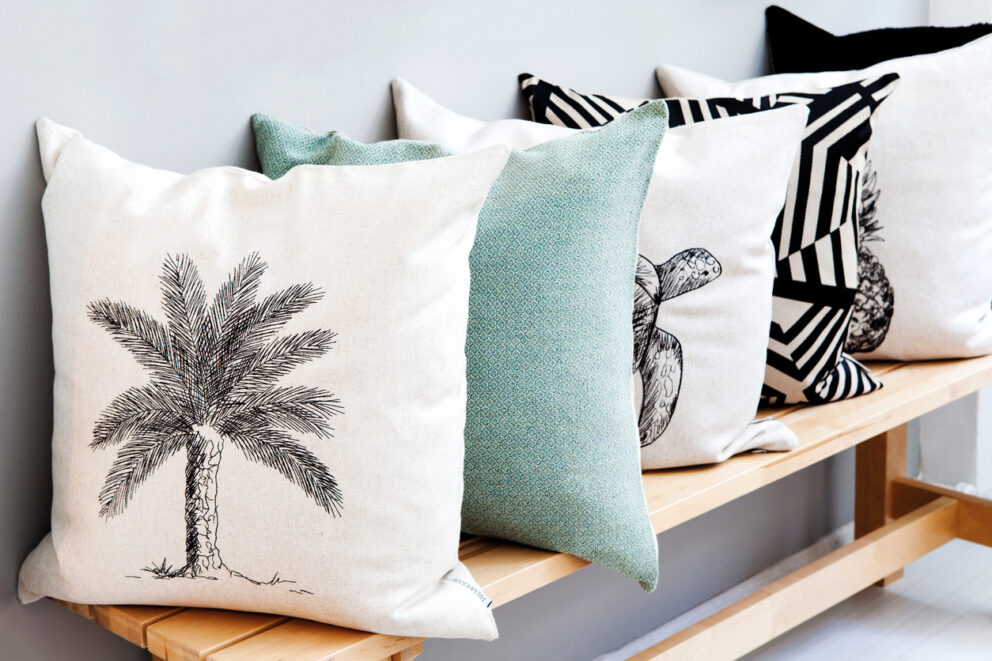
In this case, the intense black and white geometric and floral patterns were broken up by a soothing shade of mint. Thanks to this, they do not overwhelm or dominate the interior.
Avoiding exaggeration
Although mixing patterns and textures adds life to a room, it's important to avoid exaggeration. Too many diverse patterns and textures can overwhelm and create a sense of clutter. Therefore, it's worth exercising moderation and trying to maintain a balance between different décor elements. Follow the tips below, and you'll avoid an interior design faux pas.
- Choosing a dominant pattern: If you have multiple patterns, choose one dominant pattern that will serve as the focal point, and the other patterns should be more subtle. Ideally, all patterns should have the same color palette.
- Color balance: It's important to maintain color balance between different materials. Choose colors that complement each other and create a cohesive palette. Opt for two base colors and one color that completes them. We write about how to choose colors for interiors in one of our previous blog posts. Read
- Control intensity: Let some décor elements be more expressive than others. You can use intense colors or patterns on selected accents to draw attention. Dreaming of doors in an intense color? Read the post where we explain why it's worth choosing colored doors.
- Keep breathing room and space: Let each décor element breathe. Don't place them too close together to avoid a feeling of clutter.
- Variety of textures: When mixing different materials, remember to vary textures. For example, smooth fabrics can be a great counterpoint to the rough texture of wood or stone.
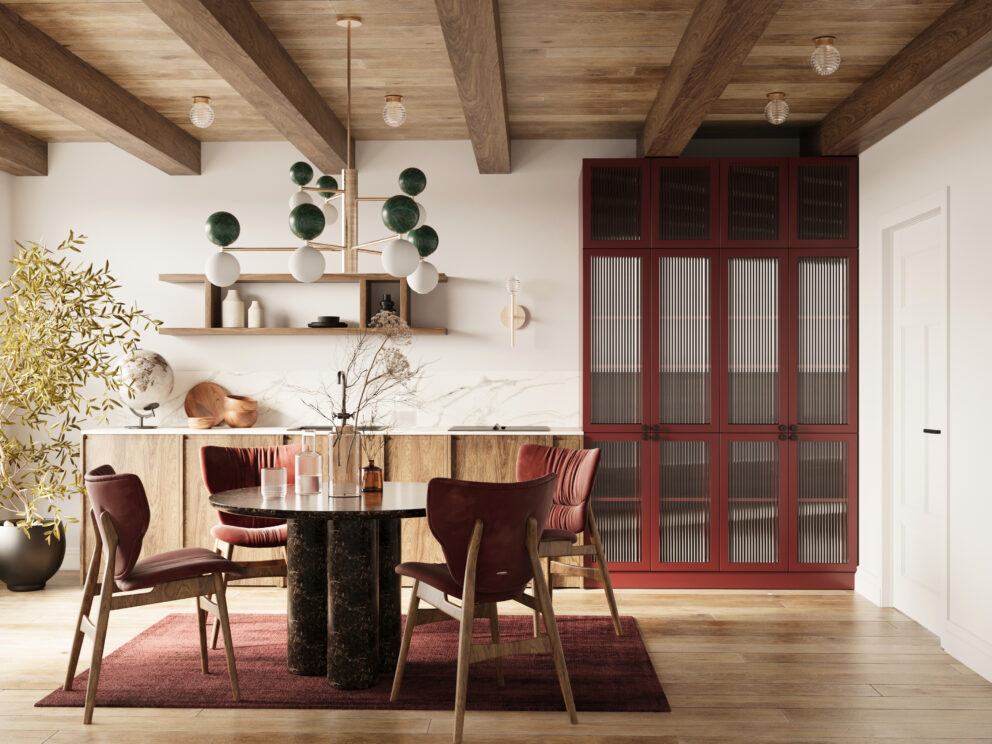
In this interior, smooth doors, tall cabinetry, and a shiny tabletop combine with the texture of raw wood, creating a cohesive composition.
Mixing patterns and textures in interior design can be a fascinating process that requires understanding certain principles of composition. It's worth experimenting, but in moderation, maintaining balance and harmony. We encourage bold combinations and discovering your own style!