
Blog
How to choose a metal door without getting lost
Steel thickness, locks, insulation, and what is not worth overpaying for in an apartment.

In this article you will learn:
- Why a steel entrance door is safer than wood for an apartment — and what is not worth overpaying for.
- Which locks and insulation actually work, rather than just looking complicated.
- Where to see {_a(L['metal'], 'metal doors')} in our catalogue, and when to start with a survey.
Wooden entrance doors look warm, but steel wins on security and service life. A metal door is not a cheap purchase, so it pays to know what is worth paying extra for — and where extra hardware becomes a liability.
Baltijas Durvis supplies metal apartment doors with installation in Latvia. This is a practical guide, not a brochure.
What to check first
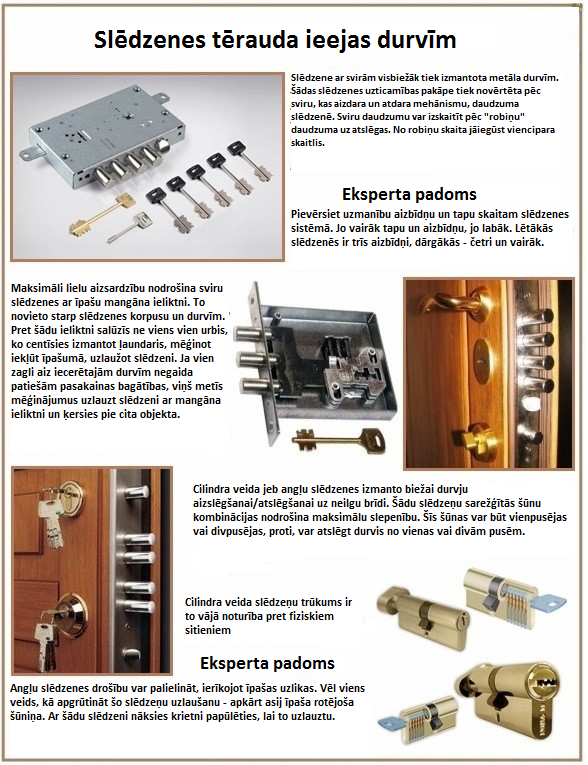
- manufacturer data: steel thickness, lock count, thermal and acoustic figures;
- frame and leaf construction — how rigid the frame is and how the door sits in the opening;
- locks and anti-burglary parts: secure enough, but still serviceable.
An over-complicated multi-point lock that cannot be repaired when it jams often means a new door. For an apartment, a well-planned two-lock setup is usually enough.
Insulation and seals
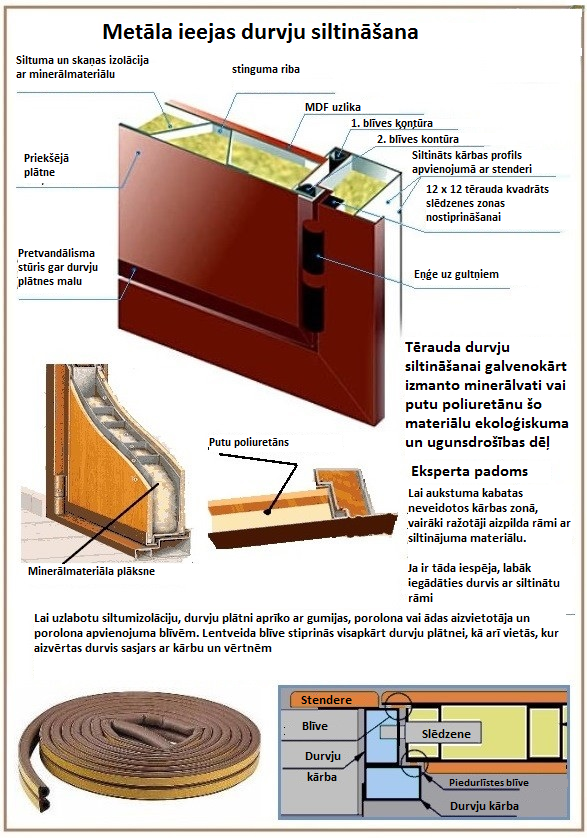
Metal conducts cold. If the door faces a stairwell or the outside, filling, perimeter seals and an insulated frame matter. Without them the leaf collects condensation and the door drafts in winter.
How to choose with us
See the metal door catalogue: apartment models, not a generic “any building” list. If you are unsure about the opening size or lock type, book a consultation first — a survey is cheaper than a remake.