
Blog
Doors, walls and floors – how to create harmonious combinations in interiors?
Interior design is the art of combining elements into a coherent and aesthetic whole. The key is to focus on the role played by each of the three planes: the floor, the walls and the doors. A harmonious combination of these elements often determines the first impression and the final character of a room. Following a few basic principles, we can arrange the space so as to achieve the intended goal: to enlarge the interior, […]

Interior design is the art of combining elements into a coherent and aesthetic whole. The key is to focus on the role played by each of the three planes: floor, walls, and doors. The harmonious combination of these elements often determines the first impression and the final character of a room. Following a few basic principles, we can arrange the space to achieve the intended goal: enlarge the interior, add elegance, or create a cozy atmosphere. In this article, we suggest how to match doors to the floor and walls to create a harmonious composition.

Doors and wall colors
The combination of door color and wall color is one of the most important duos in an interior. Doors can become a discreet background or a distinct accent that draws the eye and adds character.
What doors for white walls?
White doors against white walls are a classic and timeless solution that visually enlarges the space. The interior then gives the impression of being "clean" and orderly. The doors discreetly blend with the wall color, creating a uniform, smooth surface with it. This approach guarantees minimalist consistency and visual harmony of the entire arrangement.
If, however, we want the interior to intrigue and attract attention, let's opt for strong contrast. Black or navy doors on a white wall are a bold and modern combination, perfect for industrial or minimalist interiors. To warm up the composition, one can reach for earth tones. Colors such as sage or dark olive will warm the room and add distinctiveness.
Doors in the color of natural wood will certainly warm up the sterile white of the walls, adding coziness to the arrangement. Wood combines the safety of a timeless choice with a distinct character, which is why it works perfectly in interiors with a Scandinavian, rustic, or boho vibe.
What doors for gray walls?
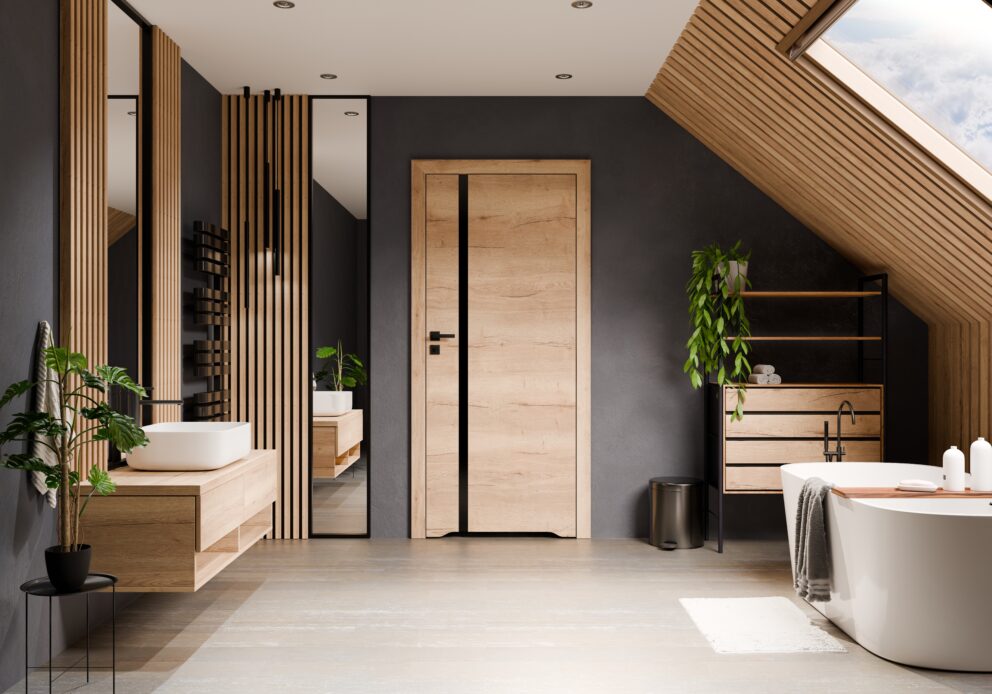
Grey has been an indisputable color hit in interiors for years, reigning in both modern and classic arrangements. To emphasize its unique character, it is worth considering two options: modern minimalism or warm contrast. In the case of door leaves in shades of grey, such as warm grey mat, we maintain consistency and monochromatic harmony. Such a combination of walls and doors will perfectly highlight the modern character of the interior, creating an ideal background for more expressive furniture and accessories. To break the coldness of grey, it is worth choosing doors in a warm wood shade, such as the Vetro E Synchro model in the halifax natural oak decor.
What doors for dark walls?
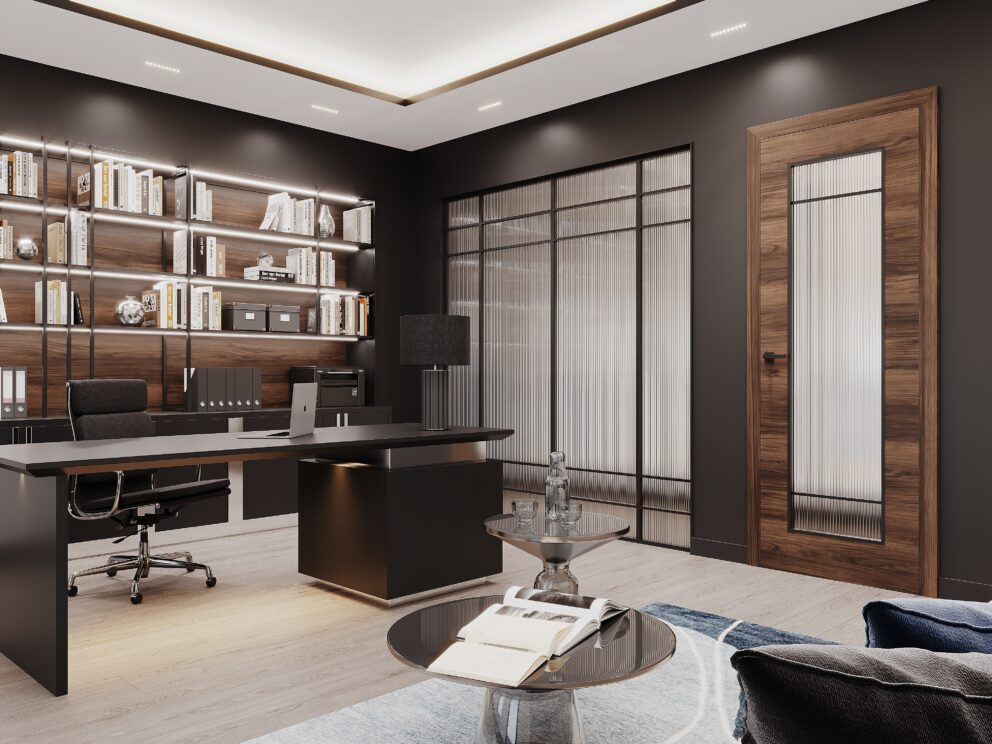
For many, dark walls are synonymous with elegance and luxury. However, so that they do not overwhelm the interior, it is worth pairing them with light doors that create a striking contrast and optically brighten the interior. Such a break allows you to maintain the lightness of the arrangement, especially in interiors with a smaller area.
On the other hand, black doors against a dark wall are a solution for lovers of bold combinations who are not afraid to experiment. Such a combination creates a refined and elegant style that works perfectly in a study or a bedroom arranged in glamour style.
Doors and floors
The floor, as the name suggests, is the foundation of the entire arrangement. The choice of doors should also be based on the principle of similarity or contrast with the floor, depending on the effect we ultimately want to achieve.
Choosing doors for floor panels
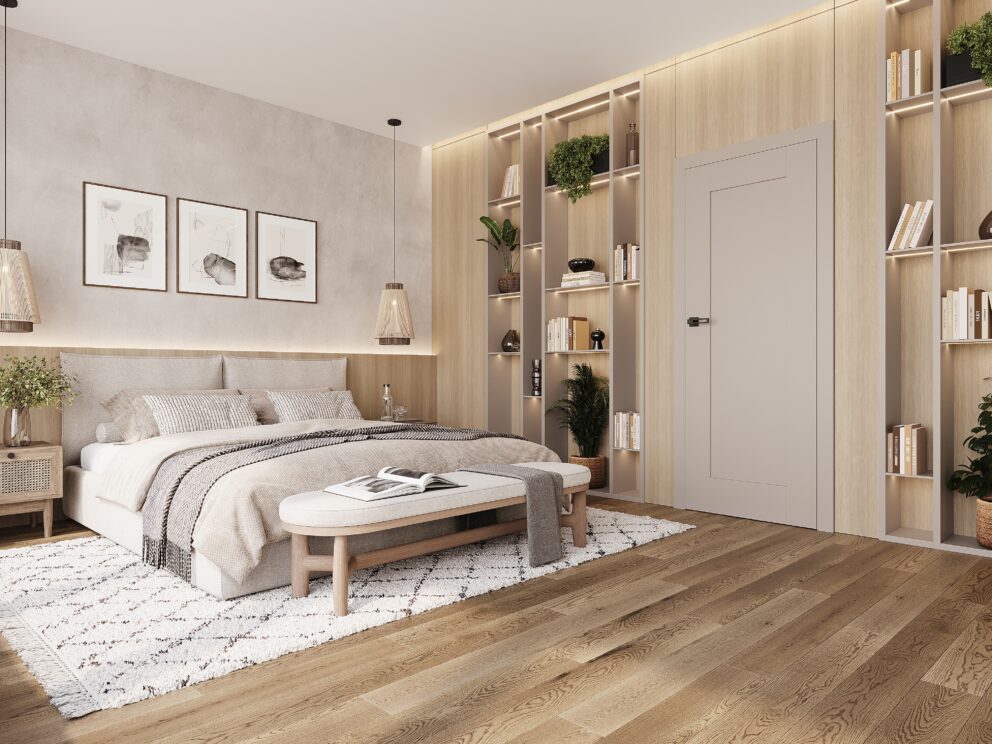
The panels currently available on the market imitate natural wood so perfectly that when choosing doors, the same rules can be applied as for wooden floors. If we want a harmonious combination, it is worth considering doors in a decor similar to the panel pattern. An alternative solution is to match the door color to the skirting boards, which allows for a subtle yet elegant separation of the floor plane from the wall. Thanks to this, we introduce optical order and tidiness into the interior.

Doors for a light floor
For rooms where the floor is light in colour, it is worth choosing white doors or doors in a warm cashmere colour. Here the principle of harmony is simple: we optically enlarge and brighten the space, just as with a combination of a white wall and light doors.
Lovers of distinctive accents may be tempted to choose doors in the colours black, oak or wenge. According to the principle of contrast, such door leaves against a light floor will become a strong element that gives the interior a modern touch.
Doors for a dark floor
A dark floor is associated with nobility and depth. It is safest to match it with doors in a light colour, especially white. Such a contrasting combination makes the arrangement gain optical lightness and elegance, and it seems more spacious.
If we want to create a luxurious and harmonious interior, it is worth choosing doors in similar dark colours. In this case, it is crucial to keep the walls in light colours, which will help avoid the impression of an overwhelming, heavy space.
Doors for a wooden floor
In this case, the temperature of the colours should be taken into account. For a floor in dark shades of wood, doors in a similar, warm tone or in classic white will match perfectly. A floor in cool shades of wood, in turn, will compose perfectly with doors in a cashmere or white colour, or in similar cooler décors imitating natural wood, such as whitewashed oak or sand oak.
Doors for floor tiles
Floors finished with tiles imitating raw concrete or stone are an excellent base for creating a modern interior. Their minimalist character will be perfectly emphasised by smooth door leaves in the classic colours white, grey or black. For floors with decorative, patterned tiles, in turn, the principle of moderation is crucial. Here the best solution will be smooth doors in a uniform, subdued colour. This is how we avoid chaos and do not disturb the harmony. The tiles will still remain the main decorative element and will play first fiddle in the arrangement.

How to keep the whole consistent?
To keep consistency in the interior, it is worth following two basic principles of composition: contrast or harmony. In the first, where the key is a combination of opposing colours, we achieve the effect of a strong and distinctive interior. In the second, also known as the “tone on tone” principle, combining elements that are close to each other in colour gives a sense of calm and harmony.
The 60/30/10 rule, often used by interior designers, can also be helpful, and its principles are very simple:
· 60% of the space is the dominant color (walls).
· 30% is the complementary color (furniture).
· 10% is only a color accent (accessories).
By maintaining the above proportions, we can be sure that the interior is coherent and harmonious to the eye.
Choosing the color of the doors for the walls and floors is a stage of arrangement that should not be skipped. The key to success is consistency, regardless of whether you opt for subdued harmony or bold contrasts. The 60/30/10 rule can prove extremely helpful, especially for beginners just starting their adventure in arranging their dream space. Thanks to a thoughtful combination of colors and textures, along with following a few basic rules, you will easily achieve the effect of a perfect interior.